Japan's Talent Industry Is Overdue for a Reboot
The talent here is extraordinary. The machinery behind it is often older than the work it does. A founder's case for a fair, constructive reboot of how Japan's talent reaches the world.
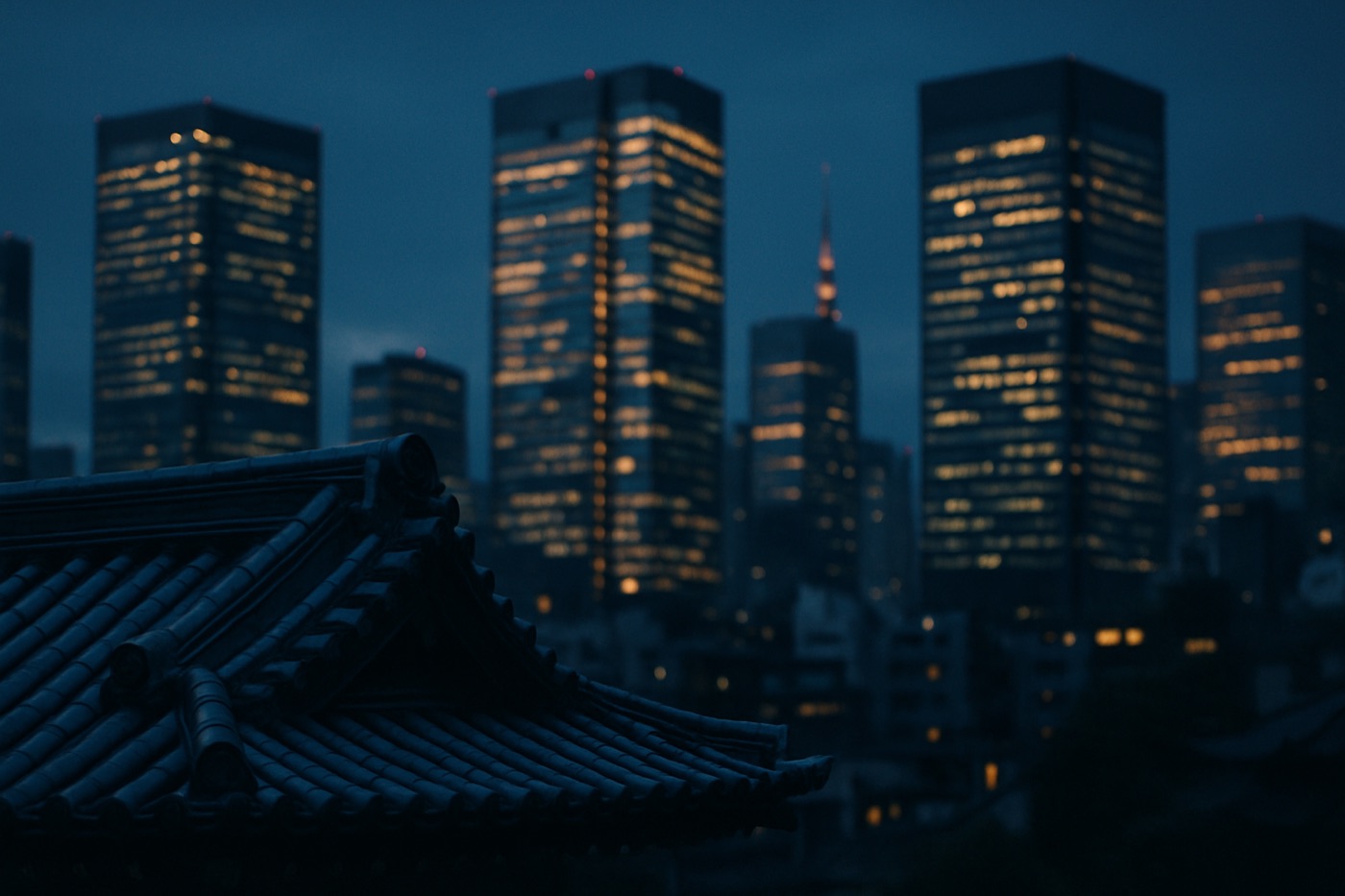
Japan makes some of the most singular talent in the world. Spend any time around it and the thought becomes inescapable: the people are extraordinary, and the machinery behind them is often older than the work they do.
I do not say that to be harsh. I say it because I have come to admire the industry enough to want better for it. The craft here is real. The reliability is real. The care is real. What is missing, more often than not, is a modern engine to carry all of that further than the next city over.
This is an argument for a reboot. Not a teardown of what works, but an honest look at the friction, and a case for what a contemporary, cross-border, technology-forward agency can add.
The talent was never the problem
Start with the part that is not broken.
The level of professionalism among Japanese talent is, frankly, humbling. People show up early. They are prepared. They treat a client's brief as a responsibility, not a suggestion. A musician will rehearse a part no one asked them to perfect. A model will hold a pose past the point of comfort because the light is finally right. An actor will quietly internalize a director's note and come back changed.
There is a word for the spirit underneath this, and it is not marketing language. It is care. The instinct to do the thing properly, to anticipate what the other person needs, to leave a room better than you found it. You feel it on set in a hundred small ways.
So if the talent is this good, why do so many remarkable people stay local their whole careers? Why does so much of this brilliance never cross a border?
The answer is rarely about ability. It is about the systems that were built around the talent, and what those systems were designed to do.
What the old machinery was built for
Most of the established machinery in this industry was designed for a domestic market, in an era before the tools we now take for granted. That is not a moral failing. It is history. The systems did their job for the world they were built in.
But the seams show.
- Communication moves slowly. A simple availability check can take days to bounce through intermediaries. For a domestic shoot booked weeks out, that is fine. For a brand working across time zones on a tight timeline, every slow loop is a reason to look elsewhere.
- Process is heavily manual. Composites circulated by hand. Schedules held in someone's head or a private spreadsheet. Negotiations conducted entirely offline, with no shared record until a contract appears at the end. It works, but it does not scale, and it leaves little room for error.
- The default horizon is domestic. When the whole apparatus is built around Japanese clients, Japanese paperwork, and Japanese norms, the path of least resistance is to keep the work at home. Going abroad means language, contracts, rights, and logistics that the existing system was never shaped to handle. So it mostly does not happen.
None of this is anyone's fault. But added together, it produces a quiet outcome: extraordinary people whose reach is capped not by their talent, but by the infrastructure around it.
The talent was never the ceiling. The engine was.
Tradition and friction are not the same thing
Here is the distinction I care about most, because it is the one most easily lost.
There is a version of "modernizing" that means flattening everything good into something faster and colder. That is not what I am arguing for. The parts of this industry that feel traditional are often the parts worth protecting. The in-person courtesy. The seriousness about craft. The relationships that take years to earn and a moment to lose. Those are not inefficiencies. They are the product.
What deserves to go is the friction that pretends to be tradition. The fax-era habits. The information that lives in one person's inbox and dies there. The week of silence that everyone has simply learned to expect. None of that is culture. It is just old plumbing, and confusing the two is how good industries talk themselves out of getting better.
The goal is not to make Japan's talent industry less like itself. It is to remove the drag so the best of it can travel.
What a modern engine actually adds
So what does a reboot look like in practice? Not slogans. Concrete things that give people back their time and their reach.
Faster, cleaner matching. Good casting is still a human judgment, and it always will be. But the search that precedes it does not need to be slow. Modern tooling, used carefully, can surface the right people for a brief in hours instead of days, so the human conversation starts sooner and from a better shortlist. The judgment stays human. The grunt work does not have to.
Communication that keeps up. A brand should not have to wait days to learn whether a date is open. Shared, current information, replies in hours, one accountable point of contact who actually answers. This is not a luxury feature. It is the baseline a modern client assumes, and meeting it is most of the battle.
Language as a default, not an afterthought. We work across six languages. That is not a flourish on a website. It is the difference between a Japanese artist being legible to a Paris creative director and being invisible to them. Cross-border work lives or dies on whether both sides can actually understand each other, in their own language, without a deal evaporating in translation.
A genuinely cross-border network. Bringing Japan's talent to the world, and the world's talent to Japan, is not a tagline you can bolt onto a domestic operation. It requires relationships, paperwork fluency, and a posture of looking outward by default. Built in from the start, it changes which opportunities are even thinkable.
Time returned to the work that matters. This is the quiet point under all the others. Every hour not lost to a slow email thread or a manual schedule is an hour a person can spend on their craft, or an agent can spend actually advocating for them. Technology, used well, is not about doing more with less attention. It is about spending attention where it counts.
Boutique on purpose
A fair objection: does "tech-forward" just mean "bigger, faster, more"? More names on a list, more volume, more churn?
No. The opposite, in fact. The point of a better engine is not to chase scale. It is to make a small, curated roster reach further than its size suggests. We represent a deliberately limited group across models, actors, musicians, and creators, and we would rather know our people deeply than manage a directory we cannot keep up with.
That is the part I think gets missed when people imagine modernizing an industry like this. The technology is in service of something old-fashioned: knowing the talent, caring about their careers, picking up the phone. The tools exist so the human work can be more human, not less.
Why now
There is a reason this argument lands today and would have sounded premature ten years ago.
The world is more reachable than it has ever been. A director in London can discover a face in Tokyo in an afternoon. A brand can run a campaign across continents from one brief. The appetite for talent that feels genuinely from somewhere, rooted in a real place and a real sensibility, has never been higher. Audiences are tired of the generic, and Japan has the opposite of generic in abundance.
What has been missing is the connective tissue. The agency model built to carry singular Japanese talent outward, and to welcome the world's talent in, with the speed and clarity a modern collaboration demands.
That is the reboot. Not louder, not bigger. Just built for the world the talent already deserves to reach.
The people were always ready. It is time the engine caught up to them.