Talent Without Borders
Talent has always been borderless; the business around it is finally catching up. Why Japan's most singular talent belongs on a global stage, the world's talent belongs in Japan, and what a boutique, multilingual, technology-forward agency does about it.

Talent doesn't respect borders. A voice can move a room in a language most of the audience doesn't speak. A face can carry a feeling that needs no subtitle. The instinct that makes someone good on a stage, in front of a camera, or in a recording booth is older than any passport.
The business around that talent, though, has always respected borders. Agencies grew up local. Contracts, customs, and contacts stayed inside one market. So the people with the rarest gifts often stayed local too, not because their talent was local, but because the machinery around them was.
OJI Entertainment exists to change that one specific thing. We are a boutique, cross-border talent and model agency based in Tokyo. We represent a deliberately small, curated roster of models, actors, musicians, and creators. Our whole reason for being is in a single phrase: talent without borders. Bringing Japan's most singular talent to the world, and the world's talent to Japan.
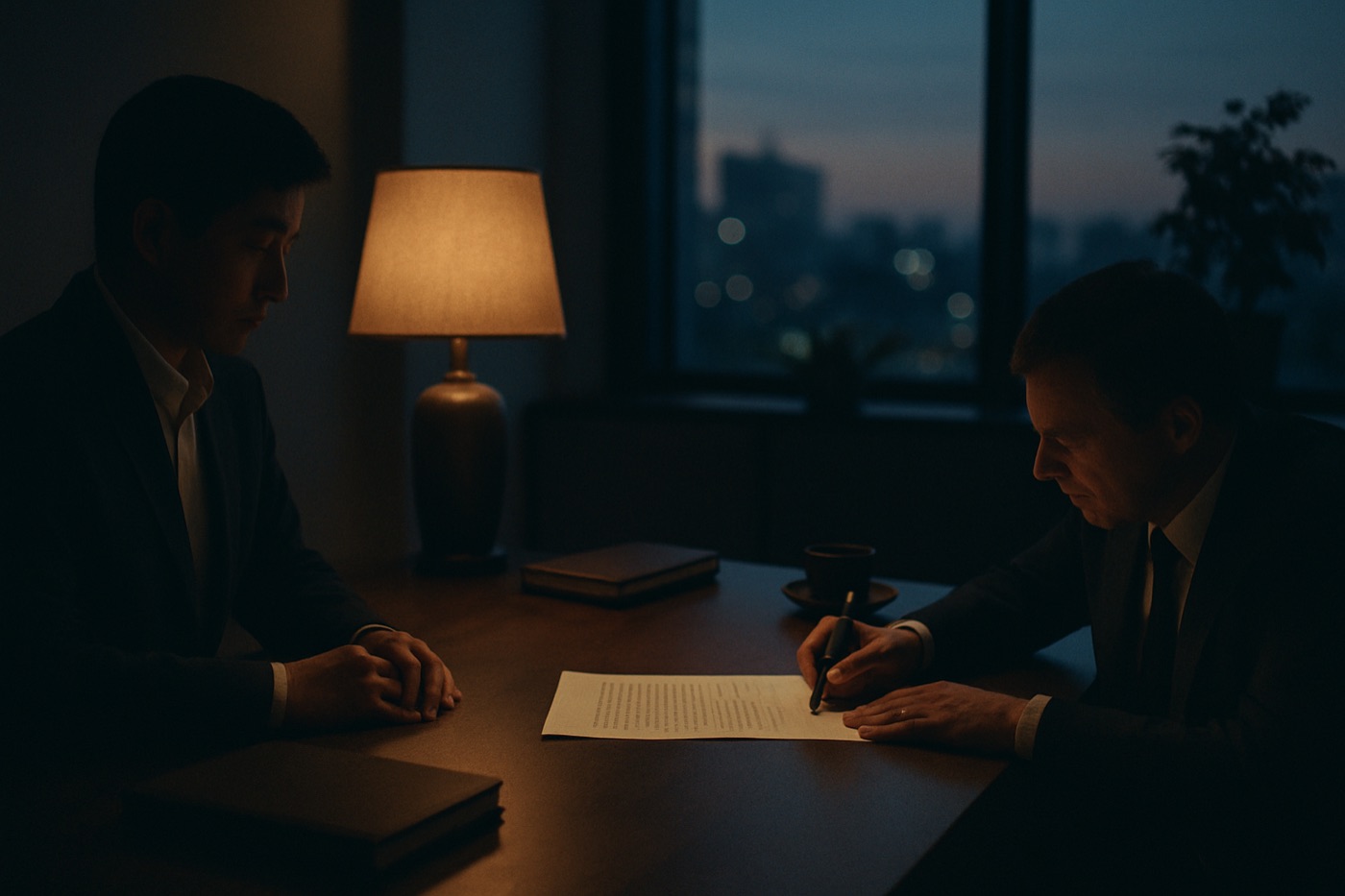
What "without borders" actually means
It is easy to put a phrase like that on a website. It is harder to mean it. For us it comes down to a few concrete commitments, not a slogan.
We represent in both directions. Most agencies are built to push talent one way: outbound to the world, or inbound to a single market. We are built for the round trip. A Japanese musician who deserves a stage abroad. An actor invited to Tokyo from overseas for a role that only they can play. A model whose look belongs in campaigns on more than one continent. The border is the thing we carry across, so the talent doesn't have to.
We work in six languages. Not as a bullet point, but because cross-border work breaks at the language seam more often than anywhere else. A brief gets softened in translation. A "maybe" gets read as a "yes." A contract term that is normal in one market sounds insulting in another. Working across English, Japanese, and several more languages lets us keep the meaning intact, in both directions, where most deals quietly lose it.
We stay small on purpose. A curated roster is not a limitation we apologize for. It is the point. When you represent a few people instead of a few hundred, you can actually know them, know what they are right for, and turn down the work that isn't. Curation over volume is a promise to the talent and to the client at the same time.
Why Japan, and why now
Japan produces some of the most distinctive talent anywhere. The craft runs deep, the discipline is real, and the sensibility is genuinely its own. Anyone who has watched a Japanese performer commit to a small role with total seriousness understands this immediately.
And yet a lot of that talent has historically stayed inside Japan. Part of that is language. Part of it is that the systems connecting Japanese talent to the wider world were never really built, or were built slowly, by hand, one fax and one phone call at a time.
The same friction runs the other way. The world is full of performers and models who would thrive on a project in Tokyo and never get the chance, because the path in, the visa, the contract norms, the on-set etiquette, is opaque from the outside. Cross-border work in Japan has real rules, and they are not the rules most foreign talent or foreign brands expect. Usage is licensed for fixed periods, not bought outright. Likeness is protected by case law, not a single statute. Inviting talent from abroad means lead times and sponsorship that don't apply to local hires.
The talent has always been world-class. The engine connecting it to the world has not. That gap is the whole opportunity.
None of that is a reason to stay home. It is a reason to have someone who actually knows the terrain on your side of the table. The barriers that kept Japanese talent local, and kept foreign talent out, are mostly logistical and informational. Those are exactly the kind of barriers a focused, modern agency can dismantle.
Technology in service of people, not instead of them
We are a technology-forward agency, and we want to be honest about what that means, because the phrase gets abused.
It does not mean we are trying to automate away the human part of this work. The opposite. The human part, the read on whether someone is right for a role, the trust built over years, the judgment in a hard negotiation, is the part that matters most, and it is the part we want to protect. So we use modern tooling for everything around it: faster matching of talent to briefs, cleaner and quicker communication across time zones, less time lost to the manual back-and-forth that eats so much of this industry's day.
The goal is simple. Spend less time on the machinery, and more time on the people and the work. Technology that buys back attention for the things only a human can do is technology worth having. Technology that puts a layer of friction between a client and a person is not, and we are not interested in it.
This is also why being small and being tech-forward fit together rather than fighting. A modern pipeline lets a deliberately small team give each person on the roster the kind of attention a much larger agency reserves for its biggest names. Scale, where we want it, comes from better tools, not a longer list.
What this looks like for the people we work with
For talent, it means an agency that treats representation as a relationship, not a transaction. We register talent the way a legitimate agency should: no upfront fees, ever. We earn our keep when you do, by getting you the right work and handling the parts you shouldn't have to think about, the contract language, the cross-border logistics, the things that get lost in translation. Our job is to make sure a yes in Tokyo and a yes in another country mean the same thing.
For brands and producers, it means one trusted contact who can actually move between worlds. Someone who can explain why a Japanese campaign is licensed the way it is, what inviting talent from abroad really involves, and how to show up to a Tokyo shoot ready rather than guessing. Range and curation in one window, instead of a giant list and a junior coordinator.
And for the work itself, it means fewer things lost in the gaps. A great deal of what goes wrong in cross-border representation isn't a failure of talent or intent. It's a brief that arrived without its context, a date that slipped because two calendars never lined up, a contract term that meant one thing in Tokyo and another somewhere else, a payment that took longer than anyone promised. We treat all of that as our responsibility, not the talent's and not an afterthought. When the logistics are handled quietly and well, what's left in front of everyone is the actual work, which is the only part that should ever have been the point.
For the press and anyone watching this industry, it means a small, deliberate bet: that the next era of talent representation is cross-border by default, multilingual by necessity, and human at the center. We think Japan is the right place to make that bet, and we think now is the right time.
The thesis, plainly
Talent has always been borderless. The business around it is finally catching up. We are a boutique agency in Tokyo, multilingual and technology-forward, built for the round trip between Japan and the rest of the world, and built to keep the human judgment at the heart of it.
That is what talent without borders means to us. Not that borders don't exist, they clearly do, in law, in language, in logistics, but that they should be our problem to carry, not the talent's. If you make something with your presence, your voice, your craft, your face, the world should be allowed to see it. We exist to make that a little more true.